0h h1 Pizza Edition
Some puzzles shout. This one whispers. 0h h1 pizza edition is a quiet corner of the internet for people who like their fun pure — no reflexes, no luck, just you and a grid and the satisfaction of a solution you can prove. The playable game on this page is Sudoku, the world’s most beloved number-logic puzzle, and it shares the exact spirit of 0h h1, the minimalist binary puzzle by Q42: three simple rules, zero guessing, and the deep pleasure of thinking clearly.
If you have never solved a Sudoku, you are in for a treat. If you have solved hundreds, you will still pick up a sharper routine below. Either way, 0h h1 pizza edition is free, instant, and waiting in your browser — no download, no account, just the grid.
A Pure-Logic Challenge: Sudoku on This Page
Let us be straight with each other, because logic-puzzle people value honesty. The game embedded on this page is Sudoku, not the red-and-blue tile game 0h h1 itself. We are keeping the 0h h1 pizza edition name because that is how this page is known, but everything you play here is the classic 9×9 number puzzle — and frankly, it belongs here. 0h h1’s whole philosophy is that a puzzle should never require a guess, and Sudoku follows the same sacred rule: every valid puzzle is solvable by pure logic alone.
Both games also train the same mental muscle, which is why 0h h1 pizza edition players take to Sudoku so naturally. In 0h h1 you balance colors across rows and columns under three constraints. In Sudoku you place digits 1 through 9 under three constraints. Different symbols, same discipline: observe, deduce, place only what you can prove. Players who love one almost always love the other, which is why this page pairs them.
Sudoku in 60 Seconds: The Only Rules You Need
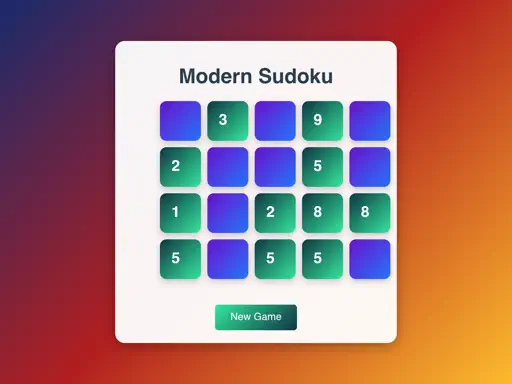
A Sudoku grid has 81 cells arranged in 9 rows and 9 columns, further divided into nine 3×3 boxes. Some cells come pre-filled. Your job: fill every empty cell with a digit from 1 to 9 so that each row contains all nine digits, each column contains all nine digits, and each 3×3 box contains all nine digits. No repeats anywhere. That is the entire rulebook.
Three constraints, that is all. But from those three constraints grows a puzzle with more possible grids than there are stars you can see on a clear night. Beginners sometimes ask where the difficulty comes from if the rules are so simple. It comes from the interaction — a digit that fits a row might break a box, and finding placements means holding all three constraints in your head at once. Start with easy puzzles in 0h h1 pizza edition and the logic will click faster than you expect.
Your First Solve: A Beginner’s Routine That Works
Staring at 50 empty cells with no plan is how beginners burn out. Use a routine instead. First, scan the whole grid and find the most-filled row, column, or box — constraints concentrate where digits already are, so dense areas give up their secrets first. Second, pick the most frequent digit on the board and cross-hatch it: for each 3×3 box, figure out where that digit must go by eliminating cells blocked by the same digit in related rows and columns. Third, place what is certain and immediately re-scan the affected row, column, and box, because every placement creates new information.
Repeat that loop — scan, cross-hatch, place, re-scan — and easy puzzles in 0h h1 pizza edition melt away. The routine matters more than talent. Players who follow the same sequence every time solve twice as fast as players who hunt randomly, because order turns a chaotic grid into a process.
Pencil Marks Done Right
Pencil marks are tiny candidate notes you write in empty cells showing which digits could still go there. They are the single most useful tool in 0h h1 pizza edition once free placements run out. The beginner method: when scanning stops giving you answers, pencil-mark the emptiest region, then look for naked singles — cells with only one candidate left. Place it, then erase that digit from every candidate list in its row, column, and box.
Two hygiene rules keep pencil marks helpful instead of overwhelming. Do not mark everything immediately — ninety seconds spent noting candidates you will never need is wasted time. And always erase stale marks the moment a digit is placed. A forgotten candidate will eventually trick you into a wrong placement, and tracing that error back is miserable.
5 Mistakes That Make Sudoku Feel Impossible
First, guessing. A guess that seems to work collapses ten moves later, far from the original mistake, and you cannot trace it. If you feel the urge to guess in 0h h1 pizza edition, you have missed a forced move — slow down and re-scan instead.
Second, forgetting the 3×3 box. Beginners check rows and columns and overlook the box, which is the constraint that makes Sudoku a puzzle rather than a simple grid. When stuck, anchor on the boxes.
Third, stale pencil marks, covered above. Clean notes or no notes.
Fourth, fixating on one area. If a corner feels impossible, move somewhere else. Progress in another region almost always unlocks the stuck one, because the constraints are all connected.
Fifth, giving up too early. Long pauses are normal above easy difficulty and are not a sign you are doing it wrong. Step away for thirty seconds, come back with fresh eyes, and the missing single is often suddenly obvious.
From Easy to Hard: Leveling Up Your Logic
Once easy puzzles take you under ten minutes, you are ready for medium grids — and for your first real technique beyond singles: the naked pair. When two cells in the same row, column, or box contain the same two candidates and nothing else, those two digits are locked to those two cells, so you can erase them from every other candidate list in the unit. It is a small idea with big consequences, and it opens the door to medium-difficulty puzzles in 0h h1 pizza edition.
Set a gentle progression for yourself. Solve easy puzzles in 0h h1 pizza edition until the routine feels automatic, then mix in one medium per session. Time yourself occasionally — not to stress, but because watching your minutes drop is genuinely motivating. Most players go from twenty-minute easies to five-minute easies within a month of casual play, and the jump feels like unlocking a new sense.
0H H1 Pizza Edition FAQ
What is 0h h1? 0h h1 is a minimalist binary logic puzzle by Q42 where you fill grids with red and blue tiles under three rules: no three same-colored tiles adjacent, equal colors per row and column, and no identical rows or columns. This page plays Sudoku in the same pure-logic spirit.
Is 0h h1 pizza edition free? Yes. The Sudoku puzzle on this page plays instantly in your browser with no download and no cost.
Do I ever need to guess? No. Every valid Sudoku is solvable by logic alone. Needing to guess means a forced move was missed — re-scan slowly.
What is the easiest Sudoku strategy for beginners? Cross-hatch the most frequent digit through each 3×3 box, place naked singles, and keep pencil marks clean. That handles most easy puzzles.
How long should an easy Sudoku take? Beginners typically need 15 to 25 minutes at first, dropping to 5 to 10 minutes within a month of regular play.
Logic is a skill, and skills grow with practice. Open 0h h1 pizza edition, work one easy grid with the routine above, and notice how quiet your mind gets when it is fully engaged. Then come back and tell us in the comments — how fast was your first solve, and which mistake on the list was tripping you up?