Tango Pizza Edition
The page says tango pizza edition, but the puzzle waiting for you is something with deeper roots: Futoshiki, a Japanese logic puzzle whose name literally means “inequality.” If you like Sudoku but wish it had more teeth, tango pizza edition is your game. A grid, a set of numbers, and a scattering of greater-than and less-than signs — and from those three ingredients comes one of the most satisfying deduction challenges you can play in a browser.
There is no timer pressuring you and no reflexes required. Futoshiki is a quiet battle between you and the grid. In tango pizza edition, every number you place is a small logical victory, and when the last cell clicks into place, it feels earned in a way few games match.
The Puzzle Waiting on This Page
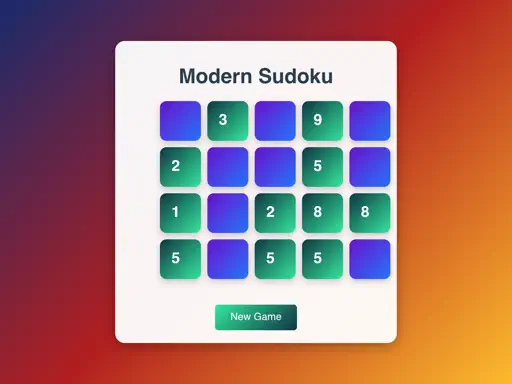
When tango pizza edition loads, you get a square grid — usually 5×5 — with a few numbers already filled in and inequality signs (< and >) sitting between certain cells. Your job: fill every empty cell with the numbers 1 through 5 so that the whole grid obeys two simple rules.
That is the entire setup. No story, no characters, no power-ups. Just you, the numbers, and the signs. It sounds sparse until you try your first puzzle and realize how much thinking fits inside those two rules.
The Only Two Rules You Need
Everything in Futoshiki flows from these:
Rule one: no repeats. Each row must contain the numbers 1 through 5 exactly once, and each column must too. This is the part Sudoku players will recognize instantly. If a row already has a 3, no other cell in that row can be 3.
Rule two: obey the signs. Wherever a < or > sits between two cells, the numbers you place must satisfy it. If a cell shows 4 > [empty], that empty cell must hold something smaller than 4. If [empty] < 2, the empty cell must be 1. The signs are not decoration — they are the puzzle's backbone.
That is genuinely all there is to learn in tango pizza edition. The depth comes from how these two rules interact.
Reading the Signs
Beginners often treat the inequality signs as secondary hints. Experienced players know they are the main event. A single sign eliminates possibilities instantly: a cell marked as greater than its neighbor cannot be 1, and a cell marked as less than its neighbor cannot be 5 (on a 5×5 grid).
Signs get even more powerful in chains. If you see cell A < cell B > cell C, then B is greater than two cells in the same row — so B must be at least 3, and often exactly 4 or 5. Spotting these chains is the skill that separates struggling beginners from confident tango pizza edition solvers. Scan every puzzle for sign chains before placing a single number.
How to Play Here
Playing tango pizza edition is straightforward. Click or tap a cell to select it, then choose a number from the row at the bottom of the screen to fill it. Click a selected cell again to enter notes mode, where you can jot down candidate numbers in small text — essential for harder puzzles.
Tango pizza edition offers multiple difficulty levels. Start easy: more given numbers, fewer tricky sign chains. The settings let you adjust audio and visuals, and an info button walks you through a tutorial if you want a guided first run.
Solve Like a Detective
Here is the method that actually works, step by step:
- Start with certainties. Look for cells where only one number is possible — a row missing just one digit, or a cell squeezed by signs into a single option. Fill those first. Solid anchors make everything else easier.
- Eliminate ruthlessly. For each empty cell, mentally cross out what cannot go there: numbers already in its row or column, plus whatever the signs forbid. What survives is your candidate list.
- Use notes mode. On anything harder than easy, track candidates in notes mode. When a cell’s candidates shrink to one, promote it to a real answer.
- Watch for pairs. If two cells in the same row both have exactly the candidates {2, 4}, then one must be 2 and the other 4 — so you can eliminate 2 and 4 from every other cell in that row. This classic technique cracks many stuck puzzles.
- Follow sign chains to their conclusions. A long chain of inequalities often forces the endpoints. Work chains from both ends toward the middle.
The golden habit for tango pizza edition: never guess. If you are guessing, you missed a deduction. Back up, re-scan the signs, and the logical move will appear.
Mistakes Every Beginner Makes
Everyone playing tango pizza edition trips on the same things at first. Knowing them in advance saves frustration:
- Ignoring the signs. Treating Futoshiki like plain Sudoku and filling rows without checking inequalities. The signs are constraints, not suggestions.
- Guessing under pressure. Placing a “probably right” number and building on it. One wrong guess poisons the whole grid — erase back to the guess when things stop adding up.
- Skipping notes mode. Trying to hold all candidates in your head. The game gives you notes mode for a reason; use it.
- Starting too hard. Jumping to a sparse expert grid before the logic feels natural. Master easy puzzles until they feel trivial, then step up.
- Forgetting columns. Focusing only on rows. Every placement must satisfy its row, its column, and its signs simultaneously.
Why This Puzzle Hooks People
Futoshiki has a devoted following in puzzle communities, and playing it via tango pizza edition shows why. Unlike reflex games, it respects your intelligence — every puzzle is solvable by pure logic, no luck involved. The difficulty scales beautifully: a 4×4 grid is a coffee-break toy, while a sparse 7×7 is a genuine mental workout.
Many players make it a daily habit, like a crossword. A few minutes of tango pizza edition deduction sharpens focus and feels productive in a way scrolling never does. And because it runs right in the browser, there is zero friction between “I have five minutes” and “I am solving.”
Frequently Asked Questions
What game plays on tango pizza edition?
This page runs Futoshiki, the Japanese inequality logic puzzle. You fill a grid with numbers 1 to 5 (or more on bigger grids) so no number repeats in any row or column, while obeying the < and > signs between cells.
What are the rules?
Two rules: each row and column must contain each number exactly once, and every inequality sign between cells must hold true for the numbers you place. That is the whole game.
Is it like Sudoku?
Similar in the no-repeat logic, but with no box regions and with inequality signs adding a second layer of deduction. Many Sudoku fans find Futoshiki fresher because the signs create different kinds of logical chains.
What is the best beginner strategy?
Fill certain cells first, eliminate impossible candidates using rows, columns, and signs, use notes mode to track candidates, and never guess — if you are stuck, re-scan the sign chains. Start on easy difficulty until the logic feels automatic.
Which difficulty should I start with?
Start with the easiest available grid — more given numbers and simpler signs. Move up when easy puzzles stop making you think. Rushing to hard grids early just teaches bad guessing habits.
Can logic alone always solve it?
Yes. Every proper Futoshiki has a unique solution reachable by pure deduction. If you feel forced to guess, you have missed a logical step — back up and look again.
That is Futoshiki in full: two rules, infinite depth — and tango pizza edition serves it fresh every run. Tango pizza edition puts one of the world’s cleanest logic puzzles one click away.
What is the largest grid you have solved, and do you use notes mode or solve in your head? Share your approach in the comments — and if you have a favorite solving trick, the puzzle community here wants to hear it.