TypeForge Pizza Edition
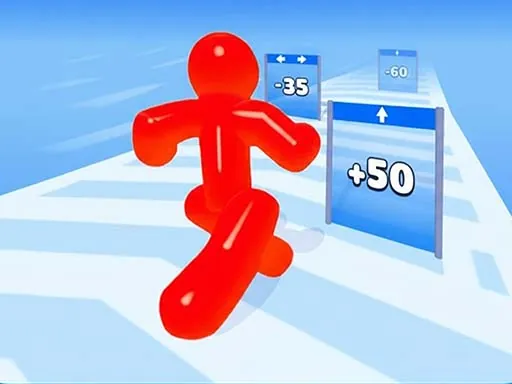
In most racing games, your thumbs do the work. In typeforge pizza edition, your vocabulary does. The version you play here runs on Type Run style gameplay: a subject appears, you type words related to it, and every word you lock in launches your runner further down the track. It is a race where the fastest fingers win, but only if the brain behind them can think of the words.
It sounds like a classroom exercise. Typeforge pizza edition plays like a sprint finish.
Words Are Your Legs: The Core Idea
Here is the deal. Each round of typeforge pizza edition gives you a subject, something like “ball games” or “fruits.” Your job is to type words that fit the subject and press enter. Every accepted word moves your character along the track. The further your words take you before the round ends, the better your result.
The twist is the economy of letters. Longer words move you further than short ones. Typing “dodge” beats typing “run.” But longer words take longer to type and are easier to misspell, and a typo means starting the word over. Every round is a constant calculation: reach for the big word or bank the safe one?
This is what makes this game secretly brilliant. It is not really a typing test. It is a decision-making game that happens to be played on a keyboard.
How to Play Typeforge
- Click play and wait for the round to start. Do not type during any countdown; early typing usually does not count.
- Read the subject the moment it appears.
- Type a word related to the subject and press enter to lock it in.
- Watch your runner advance. Longer words mean bigger jumps.
- Keep typing words until the round ends. Most distance wins.
The Subject Appears
The first two seconds of a round decide a lot. Players who freeze, staring at the subject while their brain searches for the perfect word, lose ground they never recover. The fix is to have a default opener for common subject types. Ball games? “Dodge.” Fruits? “Apple.” Animals? “Tiger.” A decent word typed instantly beats a perfect word typed five seconds late.
Locking In Words
Only type what counts. If the subject is ball games and you type “dodgeball,” many versions of the game trim it or only count the base word, so those extra letters were wasted time. Short, valid, fast: that is the mantra. And if a word gets rejected, do not argue with the game. Move on to the next word immediately. Dwelling on a rejection is how rounds slip away.
The Long-Word Gambit
Long words are the high-risk, high-reward play in typeforge pizza edition. A ten-letter word can move you dramatically further than a four-letter one. When you are behind, long words are your comeback mechanic. When you are ahead, they are how you put the race away.
But there is a catch the impatient learn quickly. Long words demand more keystrokes, and every keystroke is a chance to typo. A mistyped long word that you have to retype from scratch often costs more time than two short words would have earned. The rule of thumb: reach for long words when you are typing cleanly and confidently, and drop back to short safe words the moment your accuracy wobbles.
Smart players also build mental word banks. Before a round even starts, they are thinking in categories. If the subject might be sports, they have “championship,” “tournament,” and “basketball” loaded and ready. Vocabulary preparation sounds nerdy. Winning does not.
Beating the Blank-Mind Freeze
Everyone knows the feeling. The subject appears, you know a hundred words that fit, and your mind produces exactly zero of them. Psychologists call this retrieval block, and it gets worse the more you panic about it.
The cure is momentum. Type literally anything valid, even the most boring three-letter word you can think of. The physical act of typing unlocks the mental word faucet. One word leads to another, and within seconds you are flowing. Players who wait for inspiration lose to players who start typing and let inspiration catch up.
Another trick: think in chains. If the subject is animals and you type “tiger,” your brain naturally offers “lion,” “zebra,” “giraffe.” Each word suggests the next. Do not evaluate; just follow the chain and type.
Accuracy vs Speed: The Real Tradeoff
New players assume typing faster is always better. In typeforge pizza edition, veterans know accuracy is the real currency. Here is the math: a typo does not just cost the wrong letter. It costs the backspace, the retype, and the broken rhythm. One typo per word can easily halve your effective speed.
The fastest typeforge pizza edition players type at a controlled, rhythmic pace rather than in frantic bursts. They would rather type at 90 percent of their max speed with zero errors than at full speed with constant corrections. Find your clean speed, the fastest pace where your accuracy stays above 95 percent, and live there. As weeks pass, that clean speed climbs on its own.
Warm-Up Drills Before You Race
Professional typists warm up, and so should you. Before a serious typeforge pizza edition session, spend two minutes typing a paragraph of plain text at a comfortable pace. This wakes up your fingers and settles your rhythm without any pressure. Then do one practice round where your only goal is zero typos, ignoring speed completely. You will be amazed how much cleaner your real rounds feel afterward.
Another great drill is the alphabet sprint: type the alphabet as fast as you can, twice. It hits every key region and exposes which fingers are sluggish today. If a particular stretch of keys feels clumsy, that is useful information. Favor words avoiding those keys in your next race, and your accuracy will thank you.
Typing Faster in Real Life Too
Here is the bonus nobody expected from a racing game: typeforge pizza edition genuinely improves your typing. The average person types around 40 words per minute. Office workers who type all day often sit near 50 to 60. Dedicated practice pushes past 80, and competitive typists exceed 100.
Regular sessions of typeforge pizza edition build exactly the skills that raise WPM: familiar key positions, rhythmic typing, and quick error recovery. Players who race for fun often notice their everyday typing, emails, schoolwork, chats, getting smoother within weeks. It is practice disguised as a game, which is the only kind of practice anyone actually does.
FAQ
Is typeforge pizza edition free?
Yes. It plays free in your browser with no download. A physical keyboard is strongly recommended for racing.
How do you play typeforge?
A subject appears. Type words related to it and press enter to lock each one in. Longer valid words move your runner further down the track.
Do longer words make you faster?
Yes. Longer words travel further along the track, so they are worth more than short ones, as long as you can type them without typos.
Can typeforge improve my typing?
Yes. Regular play builds speed and accuracy naturally, and most players see their WPM climb over a few weeks.
Can I play on mobile?
It is best on desktop with a real keyboard. Mobile typing works but is much slower for racing.
Start Your Engines, Fingers
Typeforge pizza edition proves that the keyboard is a controller too, and a mighty one. Think fast, type clean in typeforge pizza edition, and let your vocabulary do the running.
What is your best round? Ever won with a monster ten-letter word at the death? Share your finest words and your WPM in the comments.