Checkers Pizza Edition
Some games need a tutorial, a download, and a forty-minute video before you understand what is happening. Checkers is not one of those games. You learn it in two minutes, and then it quietly spends the next twenty years teaching you how little you actually knew. That is the magic of checkers pizza edition — a classic board battle that fits in your browser, needs no signup, and turns any boring afternoon into a proper duel of wits.
Whether you are playing against the computer to sharpen your mind or sitting next to a friend for a same-screen showdown, this is the kind of game that never gets old. Let us break down exactly how to play, the mistakes that cost beginners every game, and the simple strategies that will make you genuinely hard to beat.
Why Checkers Still Beats Most Modern Games
Think about the last mobile game you installed. It probably asked for your email, showed you three ads before the menu loaded, and then demanded you buy gems to continue. Checkers pizza edition asks for nothing. You open it, you play. That simplicity is rare now, and it is exactly why this centuries-old game still pulls millions of players.
Unlike chess, which can feel like homework with its six different piece types and thick rulebooks, checkers gives every piece the same job. The depth comes from position and timing, not memorization. A ten-year-old can learn the rules in one sitting, yet the game has roughly 500 billion billion possible positions according to research published in the journal Science. You will never run out of new situations, which is why players keep coming back to checkers pizza edition year after year.
The two-player mode is where it shines brightest. Pass-and-play on one screen turns checkers into a social event — trash talk included. It is the perfect quick duel: a full game takes ten to fifteen minutes, just long enough to matter and short enough for “one more round.”
How to Play Checkers Pizza Edition
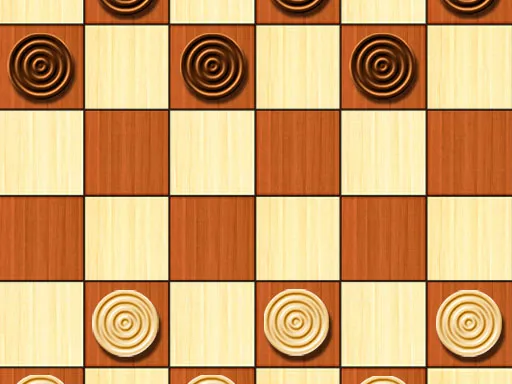
Here is the complete game in about ninety seconds of reading. Each player gets 12 pieces, placed on the dark squares of the first three rows. Dark moves first. On your turn, move one piece diagonally forward to an empty dark square.
When an opponent’s piece sits diagonally ahead of yours with an empty square behind it, you jump over it and remove it from the board. Chain multiple jumps in one turn if the landing spots line up — that is called a double or triple jump, and it feels fantastic. Push a piece all the way to the far row and it gets crowned a king, which can then move and capture both forward and backward. You win by capturing every enemy piece or by blocking your opponent so they have no legal move left. Master these basics and every match of checkers pizza edition becomes a proper battle of wits.
The One Rule Beginners Always Forget
If a jump is available, you MUST take it. No exceptions, no polite declining. This single rule changes everything. It means your opponent can deliberately dangle a piece as bait, forcing you to jump into a trap where they capture two of your pieces in reply. Once you start seeing the board through the lens of forced captures, your whole game levels up.
What Kings Can Do That Regular Pieces Cannot
Regular pieces only march forward, which makes them predictable. Kings move diagonally in any direction and capture backward too. A single king in the endgame can dance around three or four regular pieces, picking them off one by one. That is why the race to crown a king matters — but as you will see below, rushing for one recklessly is a classic beginner trap.
5 Beginner Mistakes That Lose Games Fast
Most lost games are not lost to brilliant opponent play. They are lost to the same five mistakes, repeated endlessly. Fix these and you will instantly jump past the average casual player.
1. Sprinting for a king and leaving holes. Pushing one piece down the board while your formation crumbles behind it is like leaving your front door open to chase a butterfly. Your opponent will walk through the gaps and eat your back rank.
2. Forgetting that jumps are mandatory. You set up a beautiful position, then realize a capture you did not notice forces you to wreck it. Always scan the whole board for available jumps before touching a piece.
3. Trading pieces when you are behind. Fewer pieces on the board magnify whoever is ahead. If you are down two pieces, avoid even trades — you need chaos and numbers to stage a comeback.
4. Parking pieces on the edges. Edge pieces have half the movement options of center pieces. They cannot escape in two directions, so they become easy targets. Keep your forces central where they control more squares.
5. Moving with no plan for the reply. Every move hands your opponent a turn. Before you move, ask: “What is their best capture after this?” If the answer hurts, find another move.
Simple Strategies That Actually Work
You do not need to memorize openings like a chess grandmaster. These five principles will carry you through most games on checkers pizza edition, whether you are facing the computer or a friend across the screen.
Control the center. Pieces on central squares influence both sides of the board and have maximum mobility. Fight for rows four through six early.
Keep pieces in pairs. Two pieces on adjacent diagonals protect each other — if one gets jumped, the other takes revenge. Lone wolves get eaten.
Turn forced captures into traps. Offer a piece your opponent must take, but arrange it so their forced jump lands them in a double-jump ambush. This is the most satisfying tactic in the game.
Trade smart. Ahead in pieces? Trade everything — simplify into a winning endgame. Behind? Keep the board crowded and look for complications.
Think two moves deep. You do not need to calculate ten moves ahead. Just consistently ask what happens after your move and after their most likely reply. That alone beats 80 percent of casual players.
A Strong Opening You Can Memorize in 30 Seconds
Move a center-adjacent piece forward to claim central space, then develop pieces toward the middle rather than the edges. Keep your back rank intact as long as possible — those home-row pieces are your last line of defense and your future kings’ bodyguards. That is it. No theory books required.
Playing With a Friend: 2-Player Mode
The two-player mode in checkers pizza edition is the way this game was meant to be experienced. Same screen, alternating turns, no accounts, no waiting for matchmaking. It is checkers the way your grandparents played it, minus the lost pieces under the sofa.
Before you start, agree on one thing: are you playing strict rules (mandatory jumps enforced) or casual? Strict is better — the forced-capture rule is where all the drama lives. And consider a fun house rule: the loser sets up the rematch board. It keeps things moving and the rivalry friendly.
Checkers vs Draughts: Same Game, Two Names
If you have ever wondered why some people call it draughts, here is the answer: they are the same game. “Checkers” is the American name; “draughts” is what the British, Irish, Australians, and most of the Commonwealth call it. Both mean English draughts played on an 8×8 board.
There are also international variants — International draughts uses a 10×10 board with flying kings that slide across multiple squares. Fun to know about, but the classic 8×8 game you play in checkers pizza edition is the one most of the world grew up with.
Frequently Asked Questions
Can you move backwards in checkers?
Only kings can move backward. Regular pieces move diagonally forward only, which is why protecting your advancing pieces matters so much.
Do you have to jump in checkers?
Yes. Capturing is mandatory whenever a jump is available. If you miss a forced jump, experienced players will (politely) make you take it back.
How do you win at checkers?
Capture all of your opponent’s pieces, or block them so completely that they have no legal move. Either one ends the game in your favor — and both happen regularly in checkers pizza edition once you learn to control the board.
What is the best first move in checkers?
Develop a piece toward the center rather than the edge. Center control gives your pieces more options and sets up stronger midgame positions.
Can I play checkers pizza edition unblocked at school?
Yes. Checkers pizza edition runs entirely in the browser with no download or signup, so it works on most school and office networks.
What happens if neither player can move?
The game ends in a draw. This is called stalemate, and it has rescued many losing players at the last second — always check whether your opponent truly has no moves before assuming you have won your match of checkers pizza edition.
Your Turn: Ready to Play?
Now you know the rules, the traps, and the strategies that separate casual players from real threats. The only thing left is board time. Fire up checkers pizza edition, try that center-control opening, and see how long your winning streak lasts.
Got a favorite opening move or a brutal forced-capture story? Maybe you once sacrificed three pieces to land a five-jump combo in checkers pizza edition? Drop it in the comments — the best checkers lessons always come from games that hurt to lose.